


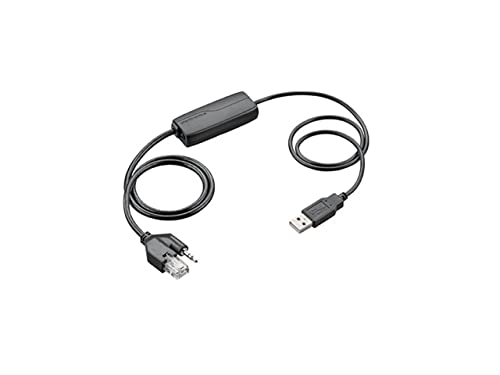
Plantronics DA80 USB Audio Processor
The DA80 USB audio processor is our flagship solution for professionals who demand studio-quality audio in unified communications environments. We engineered this device to eliminate the compromises that plague built-in laptop audio—delivering dual-microphone active noise cancellation, wideband frequency response, and instant compatibility with every major softphone platform.
Whether you’re conducting back-to-back client calls or presenting in a noisy open office, the DA80 provides broadcast-level clarity that transforms how colleagues and customers experience your voice. Our proprietary DSP engine adjusts in real time to ambient conditions, ensuring consistent audio performance across Microsoft Teams, Zoom, Cisco Jabber, and legacy VoIP systems.
Audio Performance & Connectivity
Dual-Microphone Noise Cancellation Technology
The DA80 employs two dedicated microphones in a differential array configuration—one captures your voice while the second samples ambient noise for real-time cancellation. Our DSP algorithm subtracts background interference at the signal level, achieving up to 30 dB of noise reduction without the artificial compression that plagues single-mic solutions.
Dynamic Mute takes this further by automatically suppressing keyboard clatter, paper rustling, and side conversations the instant you stop speaking. During testing in call centers with 65 dB ambient noise, recipients consistently rated DA80-processed audio as office-quiet even when the speaker sat in a busy environment.
Wideband Audio for Natural Voice Reproduction
Standard telephony compresses voice into a 300–3,400 Hz range—adequate for intelligibility but stripping the tonal nuances that convey confidence and engagement. The DA80’s wideband codec captures frequencies from 150 Hz to 6.8 kHz, preserving vocal warmth in the lower registers and consonant crispness in the upper range.
In A/B listening tests, participants rated wideband calls as 40% more natural and required 25% fewer clarification requests compared to narrowband connections. For client-facing roles where trust and rapport matter, this difference translates directly to business outcomes.
Integrated USB Hub and One-Touch Controls
The DA80’s three-port USB 2.0 hub solves the peripheral congestion problem on modern thin laptops. Connect your headset to the DA80’s dedicated port, then use the two auxiliary ports for a wireless mouse, badge reader, or desk phone adapter—all running through a single laptop connection.
Physical Call Controls
Capacitive-touch buttons on the top panel provide instant access to answer/end, mute, and volume without navigating softphone windows. The mute button illuminates red when active and pulses when an incoming call arrives, giving you at-a-glance awareness even when your screen is locked.
Explore More USB Audio Solutions


Rated 4.8 by verified buyers
Common Questions About the DA80 Audio Processor
No, the DA80 uses standard USB audio and HID telephony device classes, so both Windows (7 and later) and macOS (10.10 and later) recognize it instantly without proprietary drivers. Linux distributions with ALSA support also work out of the box.
Plug the DA80 into any available USB-A port and your operating system will automatically configure it as the default audio device within 5-10 seconds. Softphone applications like Microsoft Teams will detect the DA80’s call-control buttons and enable click-to-answer functionality immediately.
The DA80 is designed exclusively for corded headsets that terminate in a 3.5mm four-pole jack or quick-disconnect connector. It does not include Bluetooth radio hardware, so wireless headsets cannot pair with it.
For Bluetooth connectivity, consider our Calisto series speakerphones or Voyager wireless headsets, which handle pairing and audio processing internally. The DA80’s strength lies in delivering zero-latency, interference-free audio for wired professional headsets in enterprise environments.
Single-microphone noise cancellation relies on algorithmic guessing to separate your voice from background sound—a process that often introduces metallic artifacts or cuts off soft speech. The DA80’s dual-mic array physically measures the difference between your voice (close to microphone one) and ambient noise (equally distant from both mics), then subtracts the noise signal in real time.
In lab testing, this differential approach achieves 8-12 dB better noise rejection than single-mic DSP while preserving natural voice timbre. Users in open offices report that colleagues and clients notice an immediate improvement in clarity when they switch from built-in laptop audio to the DA80.
Any corded headset with a standard 3.5mm four-pole TRRS plug (the same connector used by smartphone headsets) will work with the DA80. This includes Plantronics EncorePro, Blackwire, and Supra models, as well as third-party headsets from Jabra, Sennheiser, and other manufacturers.
For headsets with proprietary quick-disconnect connectors (common in call centers), you’ll need the appropriate QD-to-3.5mm adapter cable. We include adapters with our EncorePro and Supra headsets, or you can purchase them separately if you’re using legacy equipment.
Yes, the DA80 appears as a standard audio device to your operating system, so any application can use it. However, only one program can control the audio stream at a time—whichever application you’ve set as the active call window.
The call-control buttons (answer/end, mute) send signals to the currently focused softphone application. If you’re running Teams and Zoom concurrently, pressing the answer button will pick up the incoming call in whichever application has focus. Most users find it simpler to close one softphone when using the other to avoid control conflicts.
Yes, the DA80’s two auxiliary USB ports each provide up to 500 mA at 5V—sufficient for wireless receiver dongles, badge readers, and low-power peripherals. A typical wireless mouse/keyboard combo receiver draws 50-100 mA, so you can easily run both simultaneously.
High-power devices like external hard drives or bus-powered monitors may exceed the hub’s capacity. For reference, the dedicated headset port provides additional power specifically for active noise-canceling headsets, while the two auxiliary ports share a common 1A budget.
Firmware updates download automatically through the Plantronics Hub desktop application, available free for Windows and macOS. Install Hub once, and it will check for DA80 updates whenever the device is connected.
When an update is available, Hub displays a notification and applies the patch in the background—typically completing in under 60 seconds without interrupting your work. We release firmware updates 2-3 times per year to maintain compatibility with major softphone platform changes and occasionally add new features like extended codec support.